
Best Proteins for GLP-1 Weight Loss Success
Best Proteins for GLP-1 Weight Loss Success
For people using GLP-1 medications, appetite often changes in subtle but meaningful ways. Meals may feel smaller. Hunger cues may be quieter. Foods that once felt easy to eat can suddenly feel heavy.
Protein plays a stabilizing role in this shift. Rather than pushing intake higher, protein helps meals feel more complete and steady. When chosen thoughtfully, it supports high protein weight loss by promoting fullness, protecting muscle mass, and helping meals stay balanced even when appetite is lower.
Why Protein Matters on GLP-1s
Protein supports satiety, which can be especially helpful when eating less overall. Meals that include enough dietary protein tend to feel more satisfying, making it easier to maintain consistency without forcing portions.
Research suggests that higher protein intake during weight loss supports fullness and helps preserve lean muscle mass. These effects of high-protein eating help explain why protein for weight management remains a consistent focus across many approaches to GLP-1 weight loss.
Protein Needs Can Shift With Appetite
Protein needs are not fixed. On GLP-1s, appetite changes can influence how much food feels comfortable at each meal. Some days naturally include more protein, while others rely on smaller amounts spread throughout the day.
Rather than focusing on exact grams of protein per day, many people find it more helpful to notice patterns. Spreading protein intake across meals often feels more manageable than trying to concentrate it all at once. This flexible approach supports protein intake for weight loss without turning meals into math problems.
Best High-Protein Sources for GLP-1 Users
The best high-protein options are often those that feel easy to eat and digest. Protein sources vary widely in texture, density, and how filling they feel.
These high-protein foods tend to work well for many GLP-1 users:
- Eggs and egg-based dishes
- Greek yogurt and cottage cheese
- Poultry such as chicken or turkey
- Fish, including salmon or white fish
- Tofu and tempeh
- Lentils and other legume options
- Beans paired with whole grains
- Protein shakes used as a supplement when needed
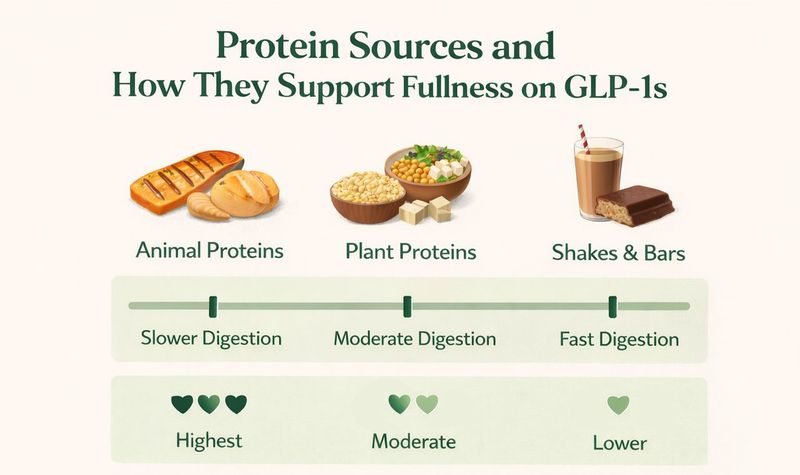
Animal-based options like eggs, yogurt, poultry, and fish tend to work well in smaller portions. They offer concentrated protein without requiring large servings. Plant-based choices such as tofu, lentils, and other legume options add protein along with fiber, which can support digestion and fullness.
Blending different protein sources across the week allows for variety without overwhelming meals. High-protein foods do not need to dominate the plate to be effective.
Protein, Fiber, and Balanced Meals
Protein and fiber work best together. Meals that combine protein with fiber-rich foods tend to feel steadier and more satisfying. This balance supports digestion and helps prevent meals from feeling too heavy or too light.
Nutritionist’s Tip: Choose Protein That Feels Gentle
Protein rich meals do not need to feel dense. Softer textures like yogurt, eggs, or slow-cooked legumes often feel easier to tolerate. Adding extra protein in small amounts can support fullness without overwhelming appetite.
Protein Shakes and Simple Add-Ons
Protein shakes can be a useful option on days when solid food feels less appealing. They offer an easy way to add extra protein without requiring large portions.
Shakes are not required for high protein eating. Some people prefer adding protein through familiar foods like cottage cheese, nut butters, or beans. The goal is flexibility, not reliance on any single format.
Protein and Long-Term Health
Protein plays a role beyond weight loss. Adequate protein intake supports muscle mass and bone health, both of which become more important during periods of weight change.
Maintaining muscle helps support long-term strength and mobility, while balanced protein intake contributes to overall resilience as eating patterns evolve.
Heart Health Considerations
When choosing protein sources, it helps to consider heart health. Some options are higher in saturated fat, which may influence cholesterol levels over time.
Balancing animal and plant proteins and choosing leaner options when possible can support heart health without eliminating favorite foods.
Carbs and Fats Still Matter
A high-protein diet for weight loss works best when it remains balanced. Carbohydrates and fats contribute energy, flavor, and satisfaction.
Protein rich meals that include whole grains, vegetables, and healthy fats often feel more sustainable than meals focused on protein alone.
Making Protein Work in Real Life
Following an Ozempic diet plan does not require special products or rigid rules. Choosing GLP-1 friendly groceries that make protein easy to include can reduce daily effort.
Many people appreciate having access to best groceries for Ozempic users that fit changing appetites and portion sizes. Groceries that mix and match across meals make protein intake feel simpler.
Consistency Over Perfection
Some people rely on a weight-loss grocery delivery service to keep meals predictable. Others combine groceries with weight loss support services or a medical weight loss program. Some prefer a flexible weight loss program built around familiar foods.
What matters most is adaptability. One Hungryroot customer shared, “I now make choices that control my calories and give me plenty of protein. I like that I can take out ingredients that I don’t need or can’t tolerate. I’m enjoying the meals and also that I’m saving money and not throwing out unused food. I’ve tried other food delivery services but this is the best by far!”
Protein That Supports You
Protein supports high protein weight loss by helping meals feel steady, satisfying, and balanced. Choosing approachable protein sources, pairing them with fiber, and staying flexible with intake can make eating on GLP-1s feel more sustainable over time.
Looking for meals that fit how you’re eating now?
Take our quiz to get GLP-1 friendly groceries and simple meal ideas tailored to your preferences.