
Anti-Aging Benefits of the Mediterranean Diet
Interest in long-term wellness has led many people to explore dietary patterns that support healthy aging. Among the most widely studied approaches is the Mediterranean diet. While many people first hear about it in connection with heart health, the Mediterranean diet benefits extend into areas such as longevity, brain health, and inflammation.
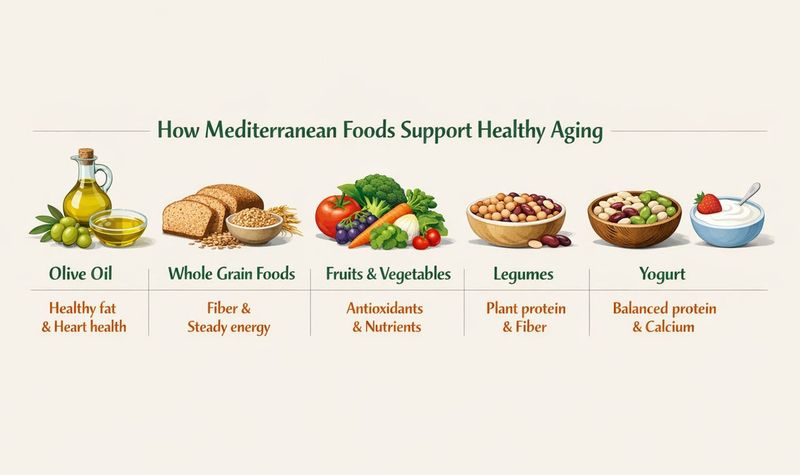
Rather than focusing on restriction, this way of eating emphasizes balanced meals built around fruits and vegetables, whole grain foods, legumes, healthy fats like olive oil, and moderate amounts of yogurt and seafood. Because it centers on simple, nutrient-dense foods, many researchers and nutrition professionals view the Mediterranean diet for longevity as a sustainable approach to healthy eating over time.
How the Mediterranean Diet Supports Longevity
One reason the Mediterranean diet has attracted so much research attention is its association with long-term health outcomes. A heart healthy Mediterranean diet typically includes vegetables, legumes, whole grain foods, healthy fats, and limited red meat. These foods contribute to a balanced pattern of eating that many experts associate with improved cardiovascular health.
Whole grain ingredients, fruits and vegetables, and healthy fat sources such as olive oil are central components of this way of eating. These ingredients help create meals that are flavorful and satisfying while supporting heart health and cholesterol balance. Because this dietary pattern tends to emphasize plant-forward foods and minimize highly processed items, it is often studied in connection with heart disease and cardiovascular disease outcomes.
Researchers continue exploring how Mediterranean dietary patterns influence aging and long-term wellness. A study examining Mediterranean diet adherence and health outcomes found that this way of eating was associated with improved markers linked to longevity and reduced chronic disease risk in several population studies.
Mediterranean Diet Brain Health
In addition to heart health, researchers frequently explore the connection between the Mediterranean diet and cognitive wellness. Nutrient-dense foods such as fruits and vegetables, whole grains, and healthy fat sources may support overall brain health when included regularly in a balanced diet.
Olive oil, a key ingredient in Mediterranean cooking, is often highlighted for its role as a primary healthy fat source. Combined with a diet rich in vegetables, legumes, and whole grains, these foods form a pattern that many experts associate with Mediterranean diet brain health and long-term cognitive wellness.
While no single ingredient determines health outcomes on its own, the overall pattern of healthy eating found in Mediterranean cuisine is one reason the diet continues to be studied in relation to aging and brain function.
Mediterranean Diet and Inflammation
Another reason the Mediterranean diet receives so much attention is its potential connection to inflammation and metabolic health. Many researchers studying the anti-inflammatory Mediterranean diet focus on how whole foods and healthy fats may support the body’s natural balance over time.
Meals built around vegetables, legumes, whole grains, and olive oil tend to include nutrients such as fiber and antioxidants. These ingredients are frequently discussed in research exploring the relationship between the Mediterranean diet and inflammation.
The diet’s approach to fat is also notable. Olive oil and other healthy fat sources often replace ingredients higher in saturated fat. At the same time, foods such as red meat are typically eaten less frequently compared with many Western dietary patterns. This shift toward healthy fat sources and plant-forward foods is one reason the Mediterranean diet is often described as a balanced and sustainable way of eating.
Mediterranean Diet Foods That Support Healthy Aging
A Mediterranean diet food list often includes ingredients that are simple, versatile, and easy to incorporate into everyday meals. Common Mediterranean pantry essentials include olive oil, whole grains, legumes, canned tomatoes, and a variety of fruits and vegetables.
Meals built from these ingredients can be adapted in many ways. A Mediterranean diet plan might include roasted vegetables with olive oil, grain bowls topped with chickpeas or lentils, vegetable-forward pasta dishes, or yogurt paired with fruit and nuts. These types of meals demonstrate how Mediterranean diet recipes can be both satisfying and flexible.
Because the Mediterranean diet focuses on a balanced combination of ingredients rather than strict rules, it works well for a wide range of cooking styles and preferences.
Building a Mediterranean Grocery Routine
Maintaining a Mediterranean diet often starts with stocking the right ingredients at home. A simple Mediterranean grocery list might include vegetables, fruits, whole grains, legumes, olive oil, yogurt, and occasional seafood.
Many households rely on Mediterranean grocery delivery or Mediterranean meal delivery services to simplify weekly shopping. Having staple ingredients available makes it easier to prepare Mediterranean meals without complicated planning.
For those new to the approach, starting with an easy Mediterranean diet meal plan or exploring a Mediterranean diet sample menu can help build confidence in the kitchen. Over time, many people develop their own routine for incorporating Mediterranean meals into their week and finding what works best for their schedule and preferences.
The Mediterranean diet has also been widely studied for its role in supporting cardiovascular health.
Chef’s Tip
Focus on flavor when preparing Mediterranean meals rather than worrying about strict dietary rules. Ingredients such as olive oil, herbs, roasted vegetables, and legumes naturally create satisfying dishes without requiring complicated recipes.
For example, roasting vegetables with olive oil and garlic or tossing warm whole grains with chickpeas, spinach, and lemon can turn simple ingredients into flavorful Mediterranean meals that support a balanced approach to healthy eating.
A Balanced Way of Eating for Long-Term Wellness
The Mediterranean diet continues to attract attention because of its flexible and sustainable approach to food. Instead of focusing on strict restrictions, it encourages a way of eating built around whole foods, healthy fats, and balanced meals.
Many people find that Mediterranean diet recipes fit naturally into everyday routines because the ingredients are simple and widely available. Whether preparing meals at home or exploring Mediterranean-inspired grocery services, the approach emphasizes variety, flavor, and consistency over time.
As one Hungryroot customer shared:
"I live in a food desert...so to get high quality meats, fish, vegetables and great spice packets is a real treat. I love that I can tailor my diet to paleo, Mediterranean, keto, anti-inflammatory (but still get cheats if I want lol) is great. They create the week's order and if I want to swap for different meals, I can do that. Everything is simple and the recipes are easy to follow. "
Curious how Mediterranean-inspired groceries and simple meal planning could fit into your routine?
Take our quick quiz to discover Mediterranean-inspired groceries tailored to your preferences.