
Flexitarian Meal Plan for a Balanced Week
Finding meals that are mostly plant-based but still allow room for meat or seafood can feel overwhelming. You want variety, convenience, and nutrition without complicated rules. A flexitarian diet makes it easier by emphasizing plant foods while keeping animal products in moderation. With thoughtful planning, you can create meals that satisfy your taste buds and support long-term wellness.
A flexitarian diet lets you enjoy diverse flavors without rigid rules. You can explore new recipes, mix seasonal produce with pantry staples, and still include small portions of meat or seafood when you like.
Many Hungryroot users share that the service simplifies a plant-forward week. One customer said, “Tasty, easy to prepare, nutritious plant-based meals with options to read all ingredients, choose & edit choices.”
What Is a Flexitarian Diet?
A flexitarian diet focuses on plant-based meals but allows for occasional meat, poultry, or seafood. Unlike strict vegetarian or vegan plans, it provides flexibility to fit your lifestyle, whether you’re eating at home or dining out. Staples include vegetables, legumes, whole grains, nuts, seeds, and lean proteins.
This approach helps reduce meat consumption while still supporting body weight management and overall nutrition. It also allows you to enjoy social meals and adapt your eating plan without stress.
Health Benefits of a Flexitarian Diet
Eating mostly plant foods with moderate meat intake supports heart health, balanced body weight, and a lower risk of type 2 diabetes. Research shows that including plants alongside occasional lean protein can improve cholesterol and blood sugar control.
Nutritionist’s Tip: Pair beans or lentils with a small portion of lean meat or fish. It provides a complete protein profile and keeps meals satisfying without over-relying on animal products.
Foods to Include
Enjoying a variety of plant-forward ingredients is key. Include:
- Vegetables and fruits: aim for color and variety every day
- Legumes: chickpeas, lentils, black beans
- Whole grains: brown rice, quinoa, oats, whole wheat pasta
- Nuts and seeds: almonds, pumpkin seeds, chia
- Lean animal proteins: chicken, eggs, fish in moderation
Don’t hesitate to experiment with seasonal vegetables, roasted nuts, or plant-based sauces to keep meals interesting. Small swaps can make familiar dishes feel fresh and satisfying.
Chef’s Tip: Roast vegetables and legumes at the start of the week. They pair with grains or a small protein for quick lunches or dinners.
Keywords included: flexitarian diet foods, plant foods, whole grains, vegetarian dinner, best vegan recipes
Foods to Limit or Approach Mindfully
While flexibility is the focus, some items are best eaten occasionally:
- Processed meats or heavily fried items
- Refined carbs and sugary snacks
- Highly packaged convenience foods
Minimizing these helps your flexitarian diet stay balanced, nutrient-dense, and easy to maintain.
Sample Flexitarian Meal Plan
Here’s a simple week of meals to guide your planning:
- Monday: Overnight oats with berries for breakfast, quinoa salad with chickpeas for lunch, salmon with sautéed greens for dinner, apple slices with almond butter as a snack.
- Tuesday: Green smoothie for breakfast, lentil and kale soup for lunch, chicken stir-fry with bell peppers and brown rice for dinner, hummus with carrot sticks as a snack.
- Wednesday: Avocado toast for breakfast, Mediterranean chickpea salad for lunch, turkey meatballs with zucchini noodles for dinner, trail mix as a snack.
- Thursday: Chia pudding with berries for breakfast, black bean tacos for lunch, roasted vegetable and tofu dinner, roasted edamame as a snack.
- Friday: Greek yogurt with granola for breakfast, lentil and quinoa bowl for lunch, baked cod with sweet potato for dinner, fresh fruit as a snack.
- Saturday: Spinach and mushroom omelet for breakfast, grain bowl with chickpeas and roasted vegetables for lunch, veggie burger with salad for dinner, dark chocolate and nuts as a snack.
- Sunday: Smoothie bowl for breakfast, caprese sandwich for lunch, eggplant and lentil curry for dinner, roasted chickpeas as a snack.
This plan shows how to enjoy plant-based meals most of the week while keeping room for lean animal products when you like.
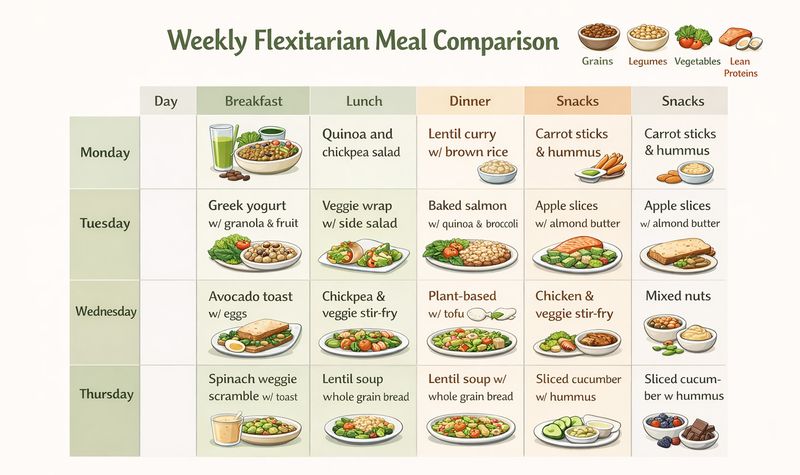
Diagram/Graphic Recommendation: This is where readers are actively comparing options and trying to make a decision. A visual here reduces friction.
Recommended graphic concept: Weekly Flexitarian Meal Comparison
Format: Simple matrix showing each day of the week with breakfast, lunch, dinner, and snacks. Use green tones for plant-based meals and subtle accent colors for animal products. Include icons for grains, legumes, vegetables, and lean proteins to highlight balance and variety. Clean, neutral, grocery-forward design.
Flexitarian Diet Tips and Advice
- Batch cook grains and legumes to save time during the week.
- Prep versatile vegetables that work with eggs, tofu, or small portions of meat.
- Keep a plant-based grocery list for quicker shopping and fewer decisions.
- Consider vegan grocery delivery to add variety and convenience.
Chef’s Tip: Double recipes when cooking to have ready-to-eat lunches or dinners for busy days.
Nutritionist’s Tip: Include fiber-rich plant foods at every meal to feel fuller longer and support healthy digestion.
Getting Started
Adopting a flexitarian diet can make eating mostly plant-based meals enjoyable and stress-free. You’ll save time on planning, explore new flavors, and maintain flexibility for your personal preferences.
Many users report that having meals pre-selected through Hungryroot takes the guesswork out of planning, helping them stick to a healthy rhythm without feeling restricted.
Ready to make busy weeks easier?
Take our quick quiz to discover groceries and simple meal ideas tailored to your preferences.