
Gut Health and GLP-1s: How These Drugs Affect Digestion
Gut Health and GLP-1s: How These Drugs Affect Digestion
When people begin using GLP-1 medications, changes in appetite are often expected. What can feel less predictable is how digestion itself responds. Meals may feel heavier than usual. Fullness can arrive quickly. Bloating or changes in bowel habits sometimes show up even when food choices stay the same.
These experiences are closely tied to gut health. Rather than signaling that something is wrong, they often reflect how digestion adjusts when eating patterns slow down and portion sizes change. Understanding those shifts can make it easier to respond with care instead of concern.
What Gut Health Looks Like in Everyday Life
Gut health is not about achieving perfect digestion. It tends to show up through everyday comfort. Meals feel manageable. Bowel patterns feel steady. Food settles without lingering discomfort.
Digestive health is shaped by many small habits working together. Meal timing, eating pace, hydration, and fiber intake all influence how the digestive system feels. When those inputs are reasonably consistent, healthy digestion often follows without much effort.
How GLP-1s Can Influence Digestion and Appetite
GLP-1 medications work in part by slowing how quickly food moves through the digestive system. This slower pace helps people feel satisfied with smaller portions and can support glp-1 weight loss over time.
That same shift can also change digestion. Food may sit longer, which can lead to bloat or a sense of pressure after meals. Some people notice their bowel patterns change as the digestive system adapts to a new rhythm. These responses are common and often settle as routines become more consistent.
The Role of Bacteria and Digestive Balance
Inside the digestive system lives a large community of bacteria that helps break down food and support digestion. When beneficial bacteria are well supported, digestion tends to feel smoother and more predictable.
Regular meals, varied plant foods, and adequate fiber help maintain gut balance. Large swings in intake or skipping meals frequently can make digestion feel less steady, especially while adjusting to GLP-1 medications.
Fiber, Fermentation, and Digestive Comfort
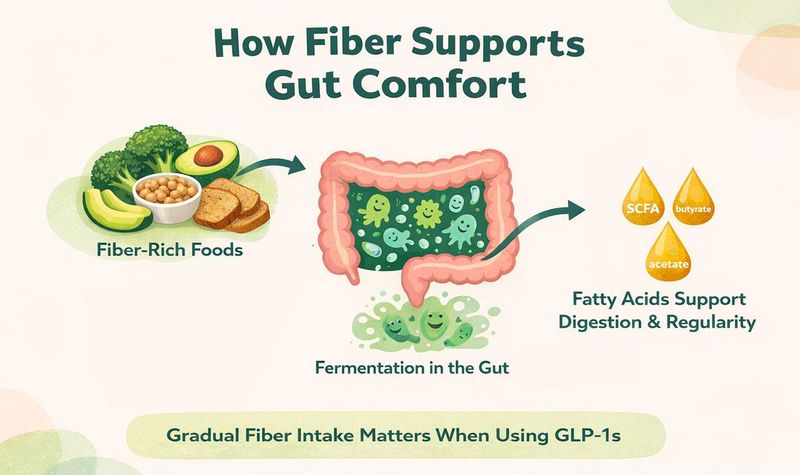
Fiber plays an important role in digestive system health. It supports bowel regularity and feeds beneficial bacteria. When bacteria ferment fiber, they produce fatty acids that help support the lining of the colon and overall digestion.
For people using GLP-1s, fiber is often best introduced gradually. Larger amounts too quickly can feel uncomfortable when appetite is lower. Prebiotic fibers from foods like oats, beans, and vegetables tend to be easier to tolerate when spread across meals.
Recent research suggests that consistent dietary fiber intake supports gut bacteria diversity and the production of short-chain fatty acids linked to digestive health, reinforcing the value of steady, food-based fiber rather than sudden increases.
Suggested graphic: “How Fiber Supports Gut Comfort”
A simple visual showing fiber-rich foods feeding beneficial bacteria, fermentation in the gut, and the production of fatty acids that support digestion and bowel regularity. This helps readers visualize why gradual fiber intake matters while using GLP-1s.
Chef’s Tip: Make Texture Work for You
When appetite is lower, softer foods often feel easier to digest. Warm grains, blended soups, and well-cooked vegetables can provide fiber without feeling heavy. Texture can make a meaningful difference in how meals settle.
Probiotics and Supplements: A Gentle Perspective
Probiotic supplements are often part of gut health conversations, but they are not always necessary. Many people support digestion through food alone by eating fiber-rich plants and fermented foods.
If someone chooses to try a probiotic, starting slowly and paying attention to digestive comfort can help guide what feels supportive. There is no single approach that works for everyone.
When Digestion Feels Off
Constipation or diarrhea can sometimes appear as digestion adjusts to slower eating patterns. Reduced intake, changes in hydration, or different food timing can all play a role.
Simple habits often help. Drinking enough fluids, moving gently, and keeping meals predictable can support the digestive system during this transition. Small adjustments tend to be more helpful than major changes.
Gut Health Extends Beyond Food
Digestive system health is also influenced by stress and pacing. Eating quickly or while distracted can make digestion feel unsettled. Slowing down and allowing time for meals helps the digestive system respond more comfortably.
Consistency matters here. Even modest routines give digestion a rhythm it can rely on.
Building Meals That Support Digestion on GLP-1s
Choosing glp-1 friendly groceries can make digestive support feel simpler. Ingredients that are straightforward, minimally processed, and easy to prepare often feel gentler on digestion.
Many people following an ozempic diet plan find that access to best groceries for ozempic users through a weight-loss grocery delivery service reduces daily decision fatigue. Having balanced options on hand makes it easier to build meals that support gut health without overplanning.
Hungryroot focuses on groceries first, helping people create meals that fit changing appetites and real schedules. One customer shared, “there are some really delicious meals that are healthy and quick. If you are someone like me that can’t stand to cook, this is the right box for you. This is amazing for anyone that has a lot of dietary restrictions. I’ve had a lot of gut issues and I have not had them anymore since using this. I get the anti inflammatory meals.”
Support That Fits Real Life
Some people use weight loss support services or a medical weight loss program alongside GLP-1s. Others prefer a flexible weight loss program centered on groceries and simple meals. Both approaches can coexist.
What often matters most is reducing friction around food. When meals feel approachable and digestion feels supported, consistency becomes easier to maintain.
Key Takeaways for Supporting Gut Health on GLP-1s
Gut health while using GLP-1 medications is less about control and more about listening. Slower digestion, shifts in appetite, and changes in bowel habits are common parts of adjustment. Gentle food choices, steady fiber intake, and consistent routines can help digestion feel more comfortable over time.
Ready to make busy weeks easier?
Take our quick quiz to discover GLP-1 friendly groceries and simple meal ideas tailored to your preferences.