
How to Build a Diabetes-Friendly Grocery List
Grocery shopping without a clear framework is where most healthy eating plans quietly fall apart. You go in with good intentions, come out with mostly the same things you always buy, and the week looks about the same as the last one. For people with diabetes, that pattern is worth breaking, not with a rigid list of rules, but with a reliable system for what to put in your cart.
A solid diabetic grocery list isn't about restriction. It's about building a weekly supply of foods that make blood sugar friendly meals the path of least resistance.
Start With a Framework, Not a Rules List
The most useful way to think about a diabetes-friendly grocery list is by category. When your cart covers each category consistently, the meals tend to take care of themselves.
The core categories for healthy eating for diabetes:
- Non-starchy vegetables
- Lean protein
- Whole grains
- Healthy fats
- Low glycemic fruits
That's the foundation of a diabetic diet plan that actually works week to week. Managing your diabetes through food doesn't require perfection in any single category, it requires reasonable coverage across all of them.
Non-Starchy Vegetables
This is the category worth leaning on most heavily. Non-starchy vegetables are high in fiber, low in carbohydrates, and have very little impact on blood sugar levels. They add volume and nutrients to meals without pushing glucose higher.
Reliable choices to keep stocked:
- Broccoli, cauliflower, and Brussels sprouts
- Spinach, kale, and other leafy greens
- Zucchini, bell peppers, and cucumbers
- Asparagus, green beans, and mushrooms
These are the backbone of most blood sugar friendly meals for people with diabetes. When half your plate at any given meal is non-starchy vegetables, the rest of the meal becomes much easier to balance.
Nutritionist's Tip: Frozen vegetables are just as useful as fresh for blood sugar management. They're picked at peak ripeness and retain their fiber and nutrients well. Keeping a few bags in the freezer means you always have a diabetes-friendly option ready, even on nights when fresh produce runs out.
Lean Protein
Protein doesn't raise blood sugar directly, which makes it a valuable anchor for any meal. Including a lean protein source at each meal slows digestion and helps prevent the kind of rapid glucose rise that comes from eating carbohydrates alone.
Good lean protein options for a diabetic grocery list:
- Chicken breast and turkey
- Fish and seafood, particularly salmon, cod, and shrimp
- Eggs
- Low-fat Greek yogurt and cottage cheese
- Legumes like lentils, black beans, and chickpeas (which also deliver high fiber)
The American Diabetes Association recommends filling half your plate with non-starchy vegetables at each meal, noting they're low in carbohydrates and have little impact on blood sugar levels.
Whole Grains Worth Stocking
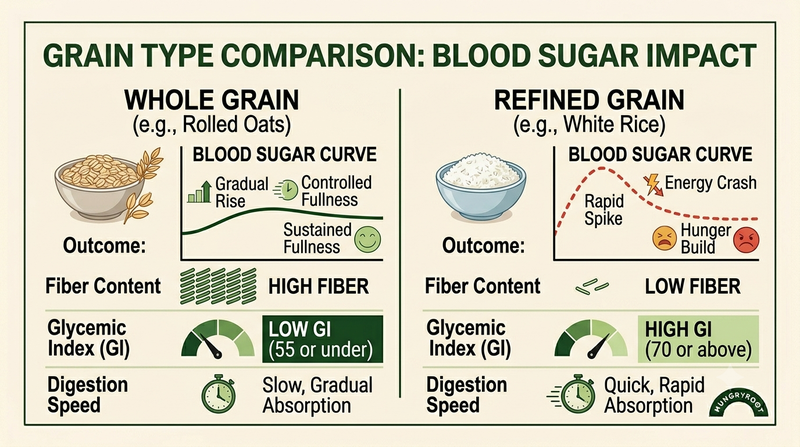
Whole grains belong on a diabetes-friendly grocery list, but the choice of grain matters. Unlike refined grains, whole grains retain their fiber and take longer to digest, which supports steadier blood sugar levels after eating.
Grains that work well for people with diabetes:
- Rolled oats and steel-cut oats
- Brown rice and wild rice
- Quinoa
- Farro and barley
- Whole grain bread where a whole grain is the first ingredient
A 2024 meta-analysis in Nutrition Journal reviewed both cohort studies and randomized controlled trials and found that higher whole grain intake was consistently associated with a lower risk of type 2 diabetes and improved glycemic markers in people already managing it.
Fruits, Fats, and a Few Pantry Staples
Fruit: Yes, fruits and vegetables both belong on a diabetes-friendly grocery list. Whole fruit contains fiber, which slows sugar absorption. Lower glycemic options like berries, apples, pears, and citrus are particularly good choices. The key is eating fruit whole rather than as juice, where the fiber has been removed and added sugar from processing can become a factor.
Healthy fats: Avocado, olive oil, nuts, and seeds all support blood sugar control by slowing digestion. A small handful of almonds or walnuts alongside a meal makes a real difference in how steadily glucose rises.
Pantry staples: Canned beans, canned fish, nut butters without added sugar, and whole grain crackers give you reliable backup options for low glycemic foods when fresh ingredients run short.
Many Hungryroot customers find that having this kind of grocery selection curated and delivered removes the weekly friction entirely. As one customer shared, "The recipes were good and there was a nice selection that was diabetes-friendly (for husband)."
What to Limit
A diabetes-friendly grocery list isn't only about what to add. A few categories are worth keeping limited, and the nutrition facts label is your most useful tool here.
Things to watch on labels when managing your diabetes:
- Added sugar: Listed separately on most nutrition facts labels. The American Diabetes Association recommends minimizing foods where added sugar appears early in the ingredient list.
- Refined grains: White bread, white rice, and most standard crackers and cereals digest quickly and spike blood sugar more than their whole grain equivalents.
- Sugary drinks: Juice, soda, and sweetened coffee drinks add significant sugar with no fiber to slow absorption.
None of these are categorically off the table for people with diabetes. The goal is awareness, not elimination.
Making the List Work Week to Week
A good diabetes grocery list is only useful if you actually use it consistently. That's where the real challenge is for most people, not knowing what to buy, but having a reliable system for buying it.
A diabetes meal plan built around the categories above gives you a repeatable weekly structure. Protein at every meal, non-starchy vegetables as the base, whole grains in moderate amounts, healthy fats to slow things down. The best groceries for blood sugar control aren't exotic or expensive. They're just consistent.
Hungryroot makes that consistency easier. The grocery selection is built around foods for diabetics to eat, lean proteins, fiber-rich produce, whole grains, and blood sugar friendly meals that come together quickly. With diabetes-friendly grocery delivery, you're not starting from scratch each week. Diabetic meal plans delivered through Hungryroot adapt to your preferences over time, making the whole system feel less like a plan and more like a routine. Whether you're looking for a flexible diabetic meal kit approach or just better stocked kitchen, diabetic food delivery takes the guesswork out of grocery day.
Chef's Tip: When you bring groceries home, spend ten minutes doing basic prep: wash and chop vegetables, portion out nuts and seeds into snack containers, and cook a batch of grains for the week. That small upfront effort means healthy eating for diabetes becomes an easy option every time you open the fridge.
Ready to make busy weeks easier?
Take our quick quiz to discover groceries and simple meal ideas tailored to your preferences.