
How to Stock a Mediterranean Pantry
A Mediterranean diet shopping list should feel clear, not overwhelming. When you know which Mediterranean pantry staples to keep on hand, everyday cooking becomes easier and more flexible.
Instead of chasing individual recipes, focus on building a kitchen stocked with core Mediterranean diet staples. Once those are in place, meals come together naturally.
The Mediterranean Diet Shopping List: Start With the Pantry
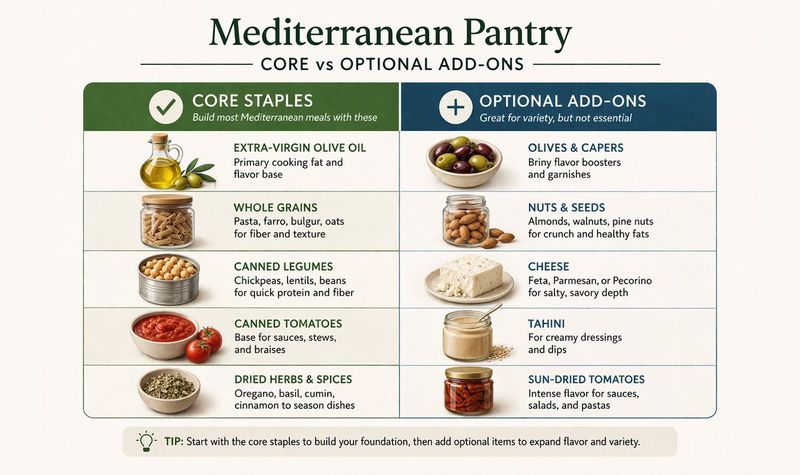
Your pantry is the foundation. Many Mediterranean pantry essentials are simple, shelf-stable, and versatile.
Start with extra virgin olive oil. A high-quality extra virgin olive oil becomes your primary cooking fat and finishing oil. It replaces many other sauces and condiments.
Next, stock whole grain options like brown rice, farro, quinoa, and oat products. A whole grain base pairs easily with vegetables and protein. Brown rice and oats can move from breakfast to dinner without much adjustment.
Lentil varieties and other legume options belong here too. Lentil soup, chickpea salads, and grain bowls all start with these pantry staples.
Other Mediterranean kitchen staples might include canned tuna, tomatoes, herbs, nuts, and seeds. Each staple supports a wide range of Mediterranean diet recipes without requiring specialty ingredients.
When building your Mediterranean grocery list, think in categories rather than single meals. This structure makes it easier to follow an easy Mediterranean diet meal plan or adapt a Mediterranean diet sample menu throughout the week.
Chef’s Tip
Choose one high-quality extra virgin olive oil and use it daily. Drizzle it over veggies, stir it into grains, or whisk it into a simple dressing. When one ingredient carries flavor across meals, the rest of your pantry can stay simple.
What Belongs in the Fridge
While the pantry holds structure, the fridge brings freshness.
Keep a rotating selection of veggies on hand. Leafy greens, tomatoes, peppers, and cucumber can layer into salads or bowls.
Greek yogurt and plain yogurt are useful for sauces and breakfasts. A scoop of Greek yogurt can replace heavier spreads.
Feta is another flexible staple. It adds flavor to salads and whole grain dishes.
Protein options in the fridge might include salmon, tuna, eggs, or occasionally red meat. Red meat is typically less central in Mediterranean diet staples, but it can fit in moderate portions.
Healthy Mediterranean ingredients are often simple. Olive oil, vegetables, legumes, and whole grain products form the base.
When reviewing Mediterranean diet ingredients, protein often shapes the shopping list.
Seafood like salmon and tuna appear frequently in a Mediterranean diet sample menu. Lentil and other legume dishes offer plant-based variety. Eggs and yogurt add flexibility.
Red meat is present but not dominant. The balance shifts toward seafood and legumes instead.
This approach makes it easier to build what feels like the best Mediterranean plan for your household without rigid rules.
What Research Reflects About This Pattern
Research examining adherence to a Mediterranean dietary pattern found that higher adherence was associated with improved overall diet quality and favorable cardiometabolic markers in prospective studies. While individual experiences vary, the research highlights how the overall pattern of Mediterranean diet food shapes dietary quality.
The food categories studied mirror what appears on a Mediterranean diet shopping list: extra virgin olive oil, whole grain products, legumes, vegetables, seafood, and moderate dairy.
Nutritionist’s Tip
Build your Mediterranean grocery list around food groups instead of single recipes. When your pantry holds whole grain options, legumes, olive oil, and canned seafood, meals come together faster.
Grocery Access and Flexibility
Access matters when building a Mediterranean pantry. Some households rely on Mediterranean grocery delivery to maintain fresh produce and seafood. Others supplement their routine with Mediterranean meal delivery during especially busy weeks.
One Hungryroot customer shared, “I live in a food desert...so to get high quality meats, fish, vegetables and great spice packets is a real treat. I love that I can tailor my diet to paleo, Mediterranean, keto, anti-inflammatory (but still get cheats if I want lol) is great. They create the week's order and if I want to swap for different meals, I can do that. Everything is simple and the recipes are easy to follow.”
Flexibility like this can make it easier to follow an easy Mediterranean diet meal plan built around reliable staples.
Keep It Practical
A Mediterranean diet shopping list does not require specialty ingredients. It centers on a manageable set of Mediterranean pantry staples and fresh foods you enjoy using.
When your pantry holds extra virgin olive oil, whole grain options like brown rice or oat products, lentil and other legume varieties, canned tuna, yogurt, and feta, you can assemble Mediterranean diet recipes without overthinking dinner.
Over time, these Mediterranean kitchen staples become second nature. The structure supports a Mediterranean diet plan that feels flexible, sustainable, and grounded in everyday food.
Ready to simplify your shopping routine?
Take our quick quiz to discover Mediterranean-inspired groceries tailored to your preferences.