
Low Glycemic Index Meals You’ll Actually Love
If you've ever stood in a grocery aisle trying to decode which foods actually belong in a low GI cart, you're not alone. The term "low glycemic" gets used a lot, but the practical meaning often gets lost in the noise. At its core, choosing low glycemic foods is about finding ingredients that digest at a slower pace, giving your body a steadier stream of energy rather than a quick surge followed by a crash. It doesn't require an overhaul of everything you eat. For many people, it just means making small, intentional swaps that add up over time.
Building a low glycemic meal plan doesn't have to mean starting from scratch every week. Small, consistent choices tend to compound more than any single perfect meal.
What Is the Glycemic Index?
The glycemic index is a scale that ranks carbohydrate-containing foods by how quickly they raise blood sugar levels after eating. Foods with a high GI score break down rapidly, sending glucose into the bloodstream quickly and triggering a larger insulin response. Low GI foods move through digestion more slowly, which means a more gradual rise in blood sugar rather than a spike in blood sugar followed by an energy drop.
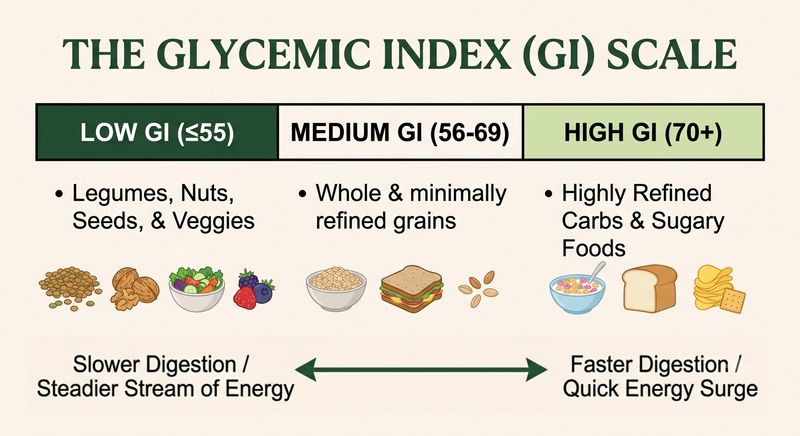
The glycemic index foods list typically divides into three tiers: low (55 or under), medium (56 to 69), and high (70 and above). Most highly refined carbs and sugary foods fall in the high range. Whole foods like legumes, oats, and most vegetables tend to land in the low to medium range.
The Best Low Glycemic Foods
The good news is that foods with a low GI are genuinely satisfying. This isn't a category defined by what's missing. It's built around ingredients that are filling, flavorful, and versatile.
Some of the most reliable low GI options include:
Lentils, legumes, and beans. These are among the lowest GI foods available. They're high in fiber and protein, which slows carbohydrate digestion and helps keep blood sugar stable for hours. Add them to soups, grain bowls, or salads.
Oats and whole grains. Rolled oats, quinoa, barley, and farro are all part of a low glycemic index diet. They provide complex carbohydrates that digest gradually, without the quick blood sugar response that comes from more refined options.
Fruits and vegetables. Most non-starchy vegetables have a very low GI. Berries in particular are a standout because they're naturally sweet, high in fiber, and among the foods that don't spike blood sugar the way fruit juices or dried fruits can.
Greek yogurt. High in protein and lower in carbohydrates than many dairy options, Greek yogurt fits easily into low carb low glycemic foods territory. It works as a base, a topping, or a snack on its own.
Nuts and seeds. These add healthy fat and slow the overall glycemic impact of a meal when combined with other ingredients.
Nutritionist's Tip
Pairing a low GI carbohydrate with a source of protein or healthy fat slows digestion even further. A bowl of oats with almond butter, or lentils served alongside roasted vegetables and tahini, keeps blood sugar more stable than any single food could on its own.
High GI Foods Worth Limiting
Not every high GI food needs to disappear from your plate entirely. Context matters. But there are a few categories worth being aware of.
Highly processed foods like white bread, sugary cereals, crackers, and packaged snacks tend to rank high on the GI scale. Sugary beverages are another area where a spike in blood sugar can happen quickly and without much satiety in return. The goal isn't to create a list of off-limit foods. It's to understand which high GI foods tend to work against steady energy so you can make informed choices most of the time.
Low GI Eating, Blood Sugar, and Diabetes
For people managing diabetes or working with a diabetes meal plan, the glycemic index offers a practical framework. A low GI approach can be part of a broader diabetic diet plan without requiring a complicated system of tracking or restriction.
Research published in 2024 found that low glycemic index dietary patterns were associated with improved glycemic control in adults with type 2 diabetes, supporting their use as part of a practical blood sugar diet plan.
Diabetes-friendly grocery delivery services like Hungryroot take some of the guesswork out of this. Instead of building a diabetic grocery list from scratch each week, you get options that already align with what healthy meals for diabetes tend to look like: whole ingredients, balanced macros, nothing overly processed.
One Hungryroot customer put it simply: "I am also diabetic so eating for me isn't fun but Hungry Root has made eating enjoyable again."
That kind of shift matters. Eating well for blood sugar management shouldn't feel like a chore.
Building Low GI Meals Without the Planning Overhead
The practical side of low gi recipes doesn't have to be complicated. A grain bowl with quinoa, roasted vegetables, chickpeas, and a tahini drizzle takes about 20 minutes. A stir-fry built on a base of cauliflower rice or farro with tofu or chicken covers most of what best groceries for blood sugar control tend to look like in practice. A snack plate of Greek yogurt, berries, and a handful of walnuts is a low GI meal that requires almost no preparation at all.
Hungryroot works well for people looking for diabetic meal kit options or diabetic meal plans delivered without the overhead of full meal planning. The grocery selection is built around whole, minimally processed ingredients, which means most of what you'll find already fits a low GI framework. For anyone interested in diabetes-friendly grocery delivery, it removes the weekly friction of starting from a blank diabetic grocery list and hoping everything comes together.
Diabetic food delivery through Hungryroot also gets more personalized over time. As you shop and rate meals, your recommendations shift to better reflect what works for your preferences and your routine.
Ready to make busy weeks easier?
Take our quick quiz to discover groceries and simple meal ideas tailored to your preferences.