
Smart Snack Pairings to Avoid Sugar Spikes
There's a kind of snack that leaves you hungrier than before you ate it. A handful of crackers, a piece of fruit on its own, something sweet from the break room. It satisfies the craving briefly, then wears off. Sound familiar?
The problem usually isn't the food itself. It's that it was eaten alone, with nothing to slow it down.
Why Pairing Matters More Than the Food Itself
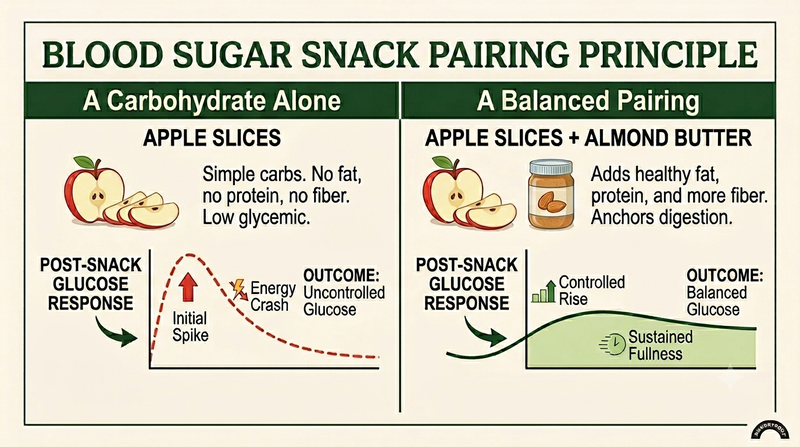
A single carbohydrate-heavy food eaten in isolation digests quickly. Glucose enters the bloodstream quickly, blood sugar rises, then drops, the familiar spike and crash.
Adding protein, fiber, or healthy fat to the same snack changes how that process unfolds. These nutrients slow digestion, so glucose is released more gradually.
Blood sugar rises less sharply and stays steadier for longer. The snack becomes a satisfying snack instead of a temporary fix.
A 2024 systematic review and meta-analysis in the Journal of Nutrition found that adding protein to a carbohydrate meal consistently reduced postprandial glucose and insulin responses across multiple controlled feeding trials, supporting the case for protein and fiber snacks as a practical tool for blood sugar management.
The pairing principle applies to anyone who wants more consistent energy. It’s about not eating certain foods alone.
Smart Pairings That Work
These healthy snack ideas are built around the pairing principle. Each one combines a carbohydrate source with a protein, fat, or fiber component that slows digestion and makes the snack genuinely filling.
Apple slices with almond butter is one of the more reliable combinations. The apple provides fiber and natural sugar. Almond butter adds fat and protein that anchors the glucose response. The two together hold much longer than either would alone.
Greek yogurt with berries delivers protein from the yogurt and fiber from the fruit. Choose plain, unsweetened Greek yogurt to keep the added sugar low. The berries add flavor without significantly impacting blood sugar.
Hummus with vegetable sticks is a plant-based pairing that works well at any time of day. Raw cucumber, bell pepper, or carrot sticks have minimal impact on blood sugar. Hummus adds protein and healthy fat. It's one of the most consistent snacks for blood sugar because the carbohydrate load stays very low.
Whole grain crackers with cottage cheese covers the crunch factor without relying on refined carbs. Look for crackers with at least 3 grams of fiber per serving. Cottage cheese is high in protein and pairs well with a few sliced cherry tomatoes or cucumber if you want something more substantial.
Building Snacks That Satisfy a Sweet Craving
Sweet cravings are real, and fighting them with willpower alone tends not to work. Sweet cravings are real. A better approach is building low-sugar snacks that actually satisfy.
A few combinations that work for sweet cravings without a significant blood sugar impact:
- Dark chocolate with almonds. The fat and fiber in the nuts buffer the chocolate's sugar.
- Greek yogurt with a drizzle of honey and walnuts. The protein and healthy fat from the walnuts slow the honey's effect.
- Sliced banana with peanut butter. Peanut butter's fat and protein moderate the banana's higher glycemic response.
- Frozen berries with cottage cheese. The cold texture feels indulgent while keeping fiber and protein high.
None of these require giving up sweetness. They just require pairing it with something that keeps blood sugar from spiking.
Snacks for Work and On-the-Go
Good snack pairings don't always happen at home. A few combinations travel well without refrigeration and hold up in a bag or desk drawer.
Portable pairings worth keeping stocked on a diabetic grocery list:
- Individual nut butter packets with a whole grain rice cake
- A small bag of mixed nuts with a piece of dried fruit in modest portions
- String cheese with whole grain crackers
- Roasted chickpeas as a standalone high-fiber, high-protein option that requires no pairing
These keep you full between meals without requiring any preparation or refrigeration. Having them on hand as part of a blood sugar diet plan means better defaults when you're away from the kitchen.
As one Hungryroot customer put it: "Truly easy meals and recipes, and absolutely delicious snacks!"
Chef's Tip: For a portable snack that genuinely holds, combine two tablespoons of almond or peanut butter with a small handful of apple slices or celery sticks in a container the night before. The nut butter firms up slightly in the fridge and the whole thing takes about two minutes to assemble. It travels well and covers protein, healthy fat, and fiber in one small container.
Keeping the Right Pairings Stocked
The snack pairings that work best are the ones that are already in your kitchen. If the almond butter is there but the apples aren't, or the hummus ran out and wasn't replaced, the default reverts to whatever is easiest to grab.
A consistent diabetic grocery list that includes pairing staples like nut butters, Greek yogurt, raw vegetables, whole grain crackers, cottage cheese, and nuts makes the healthy choice the available choice. That's the real value of a reliable weekly routine.
Hungryroot's grocery delivery is built around exactly these kinds of ingredients. The selection leans toward the best groceries for blood sugar control, from protein rich foods to fiber-rich produce and healthy fat options that cover every pairing combination on this list. With diabetes-friendly grocery delivery, the right ingredients arrive weekly without a separate shopping trip. Diabetic meal plans delivered through Hungryroot adapt to your preferences over time, and whether you're building a structured diabetes meal plan or a more flexible diabetic meal kit approach, diabetic food delivery makes healthy meals for diabetes and smart snacking feel like the natural default.
Ready to make busy weeks easier?
Take our quick quiz to discover groceries and simple meal ideas tailored to your preferences.