
The Role of Protein in Weight Maintenance
Three o'clock arrives and you're hungry again, even though lunch was only a few hours ago. It's a familiar pattern for a lot of people, and it usually comes down to what that lunch was built around. Meals low in protein tend to leave you searching for something else sooner. That gap between eating and feeling satisfied is where protein for weight loss and weight management does most of its work, quietly and without requiring much effort on your part.
This isn't about restriction. It's about understanding what keeps a meal holding.
Why Protein Keeps You Fuller Longer
Protein takes longer to digest than carbohydrates. That slower digestion is what creates the sustained feeling of fullness that carries you through the hours after a meal. Eating more protein at each meal doesn't necessarily mean eating more overall. For many people it means eating less, because the need to keep reaching for something simply decreases.
There's also a hormonal piece. Protein influences the signals your body sends about hunger and fullness. A high protein diet tends to reduce appetite more reliably than a high carbohydrate one, which is part of why adequate daily protein makes a calorie deficit more manageable without feeling like deprivation.
Protein also has a higher thermic effect than other macronutrients, meaning your body uses more energy to digest and process it. The difference isn't dramatic, but it adds up meaningfully over time as part of a broader eating pattern.
Recent findings from a 2024 analysis in Nutrients confirmed that higher protein intake was consistently associated with greater satiety and reduced overall energy intake across diverse dietary patterns.
Protein and Muscle Mass During Weight Loss
When people reduce their calorie intake without paying attention to protein, they sometimes lose muscle alongside fat. Muscle mass matters for how your body functions day to day, and preserving it during a period of fat loss makes the process more sustainable over time.
Adequate protein intake helps the body hold onto muscle while drawing on fat stores instead. This is one of the reasons healthy weight loss tends to look different from simply eating less. The composition of what you're eating, particularly how much protein it contains, plays a meaningful role in what the body prioritizes.
For people trying to maintain a healthy weight over the long term, protein continues to matter even after active weight loss ends. Muscle tissue burns more energy at rest than fat tissue, so preserving it supports a more stable metabolism over time. This isn't a guarantee, but it's a meaningful consideration in how you build your plate.
Nutritionist's Tip: Spreading protein across meals rather than concentrating it in one sitting tends to support muscle preservation more effectively. Aiming for a meaningful source of protein at breakfast, lunch, and dinner is more useful than trying to hit a daily number in a single meal.
High-Protein Foods That Support Weight Management
The most practical high protein foods for weight management are ones that integrate easily into meals you're already making. You don't need a dramatic overhaul. You need reliable anchors.
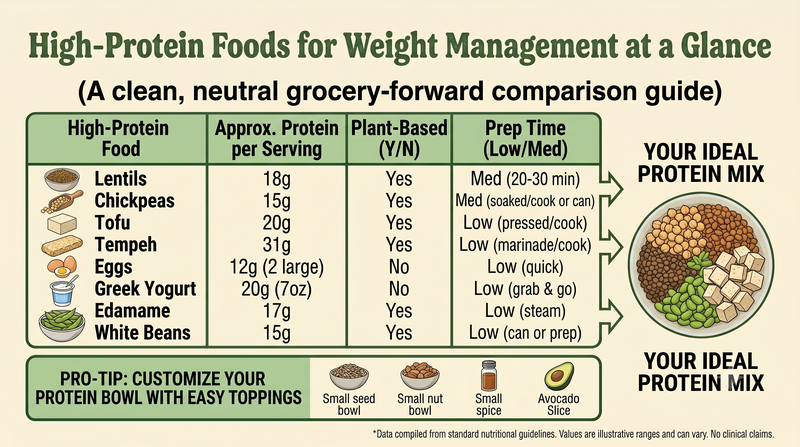
For plant based meals and vegan meal plan or vegetarian meal plan eating, the strongest options include lentils, chickpeas, black beans, tofu, tempeh, edamame, Greek yogurt if you eat dairy, and eggs. Each delivers a meaningful amount of protein per serving and works across a wide range of cooking styles.
If you're working with a vegan on a budget meal plan, dried legumes remain the most cost-effective protein source available. A bag of dried lentils or split peas costs very little, stores indefinitely, and forms the base of some of the best vegan recipes built around whole food protein.
Chef's Tip: For a fast, protein-rich vegetarian dinner that doesn't require much planning, keep canned white beans on hand. Sauté them with garlic, olive oil, wilted greens, and a squeeze of lemon. It comes together in about ten minutes and delivers around 15 grams of protein per serving without feeling like a compromise.
Building Protein Into a Plant-Based Eating Pattern
A plant based diet handles weight management well when protein is built into the structure of meals rather than treated as an add-on. The combination of protein-rich foods and fiber from vegetables and whole grains creates a naturally satisfying plate without requiring calorie tracking or meal-by-meal precision.
Plant based meal prep makes this easier across the week. Batch-cooking a legume and a grain at the start of the week gives you the components for multiple vegetarian dinner combinations without starting from scratch each night. A pot of lentils and a cup of farro covers protein across lunches and dinners for several days.
Vegan snacks also contribute more than most people account for. Hummus, edamame, roasted chickpeas, and nut butter on whole grain bread each add 7 to 10 grams of protein between meals. Keeping these as part of a solid plant-based grocery list means protein is available at every moment in the day without extra planning.
Many Hungryroot customers find the variety makes it easier to stay consistent with what they're eating. As one shared, "The great selection of healthy foods that I can try! My weight loss journey has NEVER been this easy and delicious! I fully recommend!"
Experts have noted that plant-based dietary patterns that center legumes, whole grains, and varied protein sources support weight management outcomes comparably to omnivorous patterns when overall protein intake is sufficient.
Ready to make busy weeks easier?
Take our quick quiz to discover groceries and simple meal ideas tailored to your preferences.